


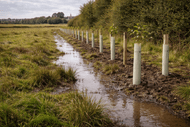
Tree & Hedge Planting in Wet or Boggy Conditions: What You Need to Know
Planting trees and hedges in wet or boggy areas presents unique challenges. While such sites can be rich in nutrients, excessive water can easily damage roots, stunt growth, and even kill young plants. For farmers, landscapers, tree planters, and landowners, understanding what to avoid, how to manage water, and which species thrive in damp conditions is essential for long-term success.
1. Avoid Planting in Permanently Waterlogged Areas
One of the most common mistakes is attempting to plant directly in areas that remain waterlogged all year. Trees and hedges need oxygen at the roots, and standing water can suffocate them.
Tips:
-
Identify seasonal waterlogging vs permanent boggy patches.
-
Avoid planting in areas with deep, persistent standing water unless you choose species that tolerate wet conditions.
-
Consider raising the planting area using mounds or ridges for better drainage.
2. Do Not Ignore Soil Structure
Heavy clay or compacted soils in wet areas can prevent roots from establishing. Simply planting without improving soil will likely result in poor growth or plant loss.
Solutions:
-
Loosen the soil to improve aeration.
-
Incorporate organic matter, such as well-rotted compost, to enhance soil structure and water movement.
-
Avoid overworking the soil when wet, as this can cause compaction.
3. Plan for Effective Drainage
Removing excess water is crucial for healthy root development. Without drainage, young trees and hedges struggle to survive.
Practical steps:
-
Create shallow ditches or swales to divert water away from the planting area.
-
Use raised beds or mounded rows to elevate plant roots above waterlogged soil.
-
Consider installing simple drainage pipes in severely boggy areas if appropriate.
4. Select the Right Species
Not all trees and hedges can tolerate damp conditions. Planting unsuitable species is a common cause of failure in wet areas.
Suitable species for wet or boggy conditions in England:
-
Alder (Alnus glutinosa) – thrives in damp soils
-
Willow (Salix spp.) – very tolerant of waterlogged conditions
-
Dogwood (Cornus spp.) – works well as a hedge in wetter soils
-
Hawthorn (Crataegus monogyna) – can tolerate occasional waterlogging if soil is reasonably free-draining
5. Avoid Planting in Frost Pockets or Low-Lying Areas
Boggy areas often coincide with dips where cold air settles. This can make young trees vulnerable to frost damage.
Advice:
-
Observe the site across different seasons to identify frost pockets.
-
Plant on slightly elevated mounds or ridges to reduce frost risk.
6. Use Tree Protection and Support
Wet soils can make trees unstable, especially on raised mounds. Stakes and protective guards are essential to protect young trees and hedges from wind or accidental damage.
Best practices:
-
Use flexible ties and stakes for support.
-
Protect young trees from grazing animals with mesh or guards.
-
Mulch around the base to regulate moisture and suppress weeds.
7. Aftercare is Critical
Tree and hedge care in boggy areas doesn’t stop at planting. Monitoring water levels and maintaining soil health is crucial.
Aftercare tips:
-
Check for waterlogging after heavy rain and adjust drainage if needed.
-
Reapply mulch annually to protect roots.
-
Inspect stakes and guards regularly to ensure stability.
Frequently Asked Questions (FAQs)
Q1: Can I plant any tree in wet soil?
No. Only species adapted to damp or waterlogged conditions should be planted in consistently wet areas. Poorly suited trees may fail quickly.
Q2: How can I remove water from a boggy planting site?
Shallow ditches, swales, raised mounds, or gentle grading can help divert water. In extreme cases, drainage pipes may be needed.
Q3: Should I plant in the middle of a wet field or at the edges?
Planting at slightly elevated edges or creating mounded rows is safer. Avoid the lowest, most waterlogged sections.
Q4: Are there hedges suitable for boggy conditions?
Yes. Alder, willow, dogwood, and hawthorn can tolerate wet soils, making them ideal for hedges in damp conditions.
Q5: When is the best time to plant in wet areas?
Late autumn or winter, when plants are dormant, is generally best. Avoid overly wet or frozen soil, and ensure good drainage measures are in place.