


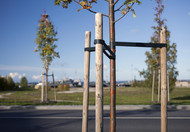
How to Stake and Tie Young Trees for Optimal Growth in the UK
Proper staking and tying of young trees is vital to prevent wind rock, leaning, and damage during their first few years. Whether you are planting on a farm, estate, or as part of a woodland creation scheme, using the right techniques ensures trees grow upright, develop strong roots, and survive the first winter.
This guide explains the correct staking methods, tie types, and common mistakes, while linking to recommended supplies from GardenersSupplies.co.uk.
Why Staking and Tying Matters
-
Prevents wind rock: Young trees with shallow roots can be uprooted or damaged in strong winds
-
Supports growth: Keeps trees upright and encourages straight trunks
-
Reduces stress: Minimises damage to roots and bark
-
Compliance with grants: Many UK tree planting grants require staking for bare root trees
Trees that are not staked properly may lean, twist, or fail during their critical first years.
Step 1: Choosing Stakes
-
Material: Wooden or metal stakes are common; wooden stakes blend into natural landscapes
-
Height: Usually 2/3 the height of the tree
-
Number of stakes: One stake may suffice for sheltered areas; two stakes recommended for exposed sites or taller trees
Tip: Use high-quality stakes from GardenersSupplies.co.uk to ensure durability throughout the first 2–3 years.
Step 2: Installing Stakes
-
Drive stakes into the ground beside the tree, not through roots
-
Position stakes to avoid restricting tree growth
-
For windy sites, consider two stakes on opposite sides to stabilise the tree
Proper stake installation ensures trees are stable without impeding root development.
Step 3: Choosing Tree Ties
-
Adjustable ties: Allow growth and prevent girdling
-
Biodegradable ties: Break down over time, reducing maintenance
-
Rubber or webbed ties: Provide cushioning against trunk movement
Common mistake: Using fixed or tight ties, which can damage bark and stunt growth.
Step 4: Attaching the Tree
-
Loop the tie around the tree trunk at roughly 1/3 of the tree’s height
-
Attach to the stake, allowing slight movement
-
Ensure ties are snug but not constrictive
This method supports the tree while allowing natural movement, which encourages strong root anchoring.
Step 5: Maintaining Stakes and Ties
-
Check ties and stakes at least once a season
-
Adjust or replace ties as the tree grows
-
Remove stakes and ties after 2–3 years, or once the tree is fully established
Proper maintenance prevents damage and supports healthy long-term growth.
Mulching and Additional Protection
-
Apply mulch mats or biodegradable mulch around the base
-
Keep mulch slightly away from the trunk
-
Mulching retains moisture and suppresses weeds, complementing staking
Mulching combined with staking significantly improves first-year survival rates.
Common Mistakes to Avoid
-
Using stakes that are too short or weak
-
Ties that are too tight or rigid
-
Skipping maintenance checks
-
Removing stakes too early, before the tree is established
-
Planting without mulch, leaving roots exposed
Avoiding these mistakes ensures strong, upright, and healthy trees.
Supplies Checklist for Staking and Tying
-
Wooden or metal stakes
-
Adjustable or biodegradable ties
-
Mulch mats or weed control fabrics
-
Tree guards (if needed for browsing protection)
-
Hand tools for installing stakes
High-quality staking supplies from GardenersSupplies.co.uk reduce failure rates and save time on farms, estates, and large planting projects.
Frequently Asked Questions (FAQ)
How long should a tree be staked?
Typically 2–3 years, until roots are strong enough to support the tree naturally.
Can I reuse stakes and ties?
Yes, if they are in good condition. Biodegradable ties will degrade and should be replaced.
Should all trees be staked?
Most bare root and young container trees benefit from staking, especially in exposed or windy areas.
Conclusion
Staking and tying are essential steps in UK tree planting projects, supporting young trees against wind, browsing, and mechanical damage. By using the correct stakes, ties, and maintenance techniques, landowners, farmers, and contractors can ensure their trees grow upright, establish strong roots, and survive their critical first years.
High-quality supplies from GardenersSupplies.co.uk make staking easy, efficient, and compliant with grant-funded woodland creation schemes.