


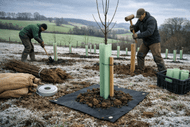
Complete Guide to Winter Tree Planting in the UK
Winter is the most important tree planting season in the UK. From November through to March, millions of bare root trees are planted across farms, estates, roadsides, developments, and conservation projects. When carried out correctly, winter planting gives trees the best possible start, allowing roots to establish before spring growth begins.
However, successful winter tree planting is not just about putting a tree in the ground. Poor technique, inadequate protection, or incorrect materials can lead to high failure rates, wasted labour, and costly replanting. For landowners, farmers, contractors, and landscapers, understanding best practice is essential to maximise survival and meet long-term objectives.
This guide explains how to plant trees in winter in the UK, covering timing, preparation, planting technique, protection, and aftercare. It also highlights the essential tree planting supplies available from GardenersSupplies.co.uk to help ensure your planting project is a success.
Why Winter Is the Best Time to Plant Trees
Most native and ornamental trees planted in the UK during winter are supplied as bare root stock. These trees are dormant, meaning they are not actively growing leaves or shoots. This dormancy makes winter the ideal planting window.
Key benefits of winter tree planting:
-
Reduced transplant shock – Trees are not using energy on leaf growth
-
Improved soil moisture – Winter rainfall supports root establishment
-
Lower weed competition – Grass and weeds are slower-growing
-
Stronger spring growth – Roots establish before the growing season
-
Higher survival rates – Especially in the first year
For woodland creation projects and farm planting schemes, winter planting is often a requirement to meet UK environmental and grant guidelines.
When Can You Plant Trees in the UK?
The winter planting season typically runs as follows:
-
England & Wales: November to March
-
Scotland: November to early April (weather dependent)
The key factor is soil condition, not the calendar. Trees should only be planted when:
-
Soil is workable
-
Ground is not frozen
-
Soil is not waterlogged
Planting into frozen or saturated ground is one of the most common reasons trees fail.
Preparing the Site for Winter Tree Planting
Good preparation dramatically improves tree survival.
Clear the Planting Area
Remove grass, weeds, and surface debris where each tree will be planted. Grass competes aggressively for moisture and nutrients, especially in the first year.
For larger planting projects, pre-clearing planting lines saves time and improves consistency.
Improve Soil Structure
Dig holes wide enough to allow roots to spread naturally. Break up compacted soil at the base and sides of the hole to encourage root penetration.
On heavy clay soils, improving drainage and avoiding compaction is especially important during winter months.
Spacing and Layout
Correct spacing depends on species and purpose:
-
Woodland planting: typically 2–3 metres
-
Hedgerows: closer spacing
-
Feature trees: wider spacing
Mark planting positions clearly to maintain straight lines and allow for future maintenance.
Product tip: Mulch mats and weed control fabrics from GardenersSupplies.co.uk help suppress weeds, retain moisture, and protect young trees during establishment.
Handling Bare Root Trees Correctly
Bare root trees are vulnerable if handled poorly.
Best practice:
-
Keep roots moist and covered at all times
-
Protect roots from wind and frost
-
Plant as soon as possible after delivery
If planting is delayed, trees should be heeled in by burying roots temporarily in moist soil.
Avoid:
-
Letting roots dry out
-
Leaving trees exposed on site
-
Bending or forcing roots into small holes
Correct handling alone can significantly increase survival rates.
Step-by-Step Winter Tree Planting Technique
-
Dig the hole
Wide enough for roots to spread naturally, not forced or bent. -
Position the tree
The root collar should sit level with the surrounding soil. -
Backfill carefully
Use fine soil, working it around the roots to eliminate air pockets. -
Firm gently
Press soil down lightly with your boot to stabilise the tree without compacting. -
Water if required
Only water if conditions are unusually dry.
Correct planting depth and stability are critical for long-term success.
Protecting Young Trees in Winter
Unprotected trees are highly vulnerable during their first few years.
Tree Guards
Tree guards protect against:
-
Rabbits
-
Deer
-
Livestock
-
Wind and weather
Common options include:
-
Spiral guards – Ideal for rabbit protection
-
Mesh guards – Suitable for deer-prone areas
-
Shelters – For exposed or high-risk sites
Stakes and Ties
Staking prevents wind rock, which can damage roots and slow establishment.
-
Stakes should be around two-thirds the height of the tree
-
Ties should be adjustable and checked annually
Product tip: GardenersSupplies.co.uk stocks a full range of tree guards, stakes, and ties suitable for farms, estates, and large planting schemes.
Winter Aftercare for Newly Planted Trees
Tree planting does not end once the tree is in the ground.
Key winter aftercare tasks:
-
Check stakes and ties after storms
-
Re-firm soil around loosened trees
-
Inspect guards for damage or displacement
-
Ensure mulch mats remain correctly positioned
Regular inspections during winter can prevent failures before spring growth begins.
Essential Winter Tree Planting Supplies Checklist
For efficient planting, ensure you have:
-
Bare root trees
-
Tree guards or shelters
-
Stakes, canes, and ties
-
Mulch mats or weed control fabric
-
Spades, dibbers, and planting tools
Having the correct supplies ready on site improves productivity and planting quality.
Frequently Asked Questions
Can you plant trees in frozen ground?
No. Frozen soil prevents root establishment and can cause tree failure.
Do trees need watering in winter?
Only during extended dry periods. Overwatering is more harmful than underwatering.
How long should tree guards stay in place?
Typically 2–3 years, depending on growth and browsing pressure.
Conclusion
Winter is the most effective time to plant trees in the UK, but success depends on correct preparation, planting technique, and protection. By using high-quality tree planting supplies such as guards, stakes, and mulch mats, landowners, farmers, and contractors can significantly improve survival rates and reduce costly replanting.
Following best practice not only protects your investment but ensures trees establish strongly and thrive for decades to come.