


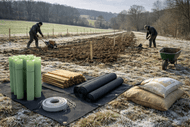
How to Prepare Land for Tree Planting on Farms & Estates
Successful tree planting begins long before the first spade of soil is turned. Proper land preparation ensures bare root trees and saplings establish quickly, survive the first winter, and grow into healthy, mature specimens. For farmers, landowners, contractors, and landscapers across the UK, understanding best practice is essential to maximise survival rates and avoid costly mistakes.
This guide provides step-by-step advice on surveying, clearing, soil preparation, spacing, weed management, and wildlife protection. It also highlights the essential tree planting supplies available from GardenersSupplies.co.uk to make planting easier, faster, and more successful.
Why Land Preparation Is Critical
Poor land preparation can lead to:
-
Weak root establishment
-
Increased competition from grass and weeds
-
Soil compaction that reduces water penetration
-
Tree failure during harsh winter or dry periods
For grant-funded woodland creation projects, evidence of proper land preparation is often required to comply with UK environmental standards. Proper preparation also reduces labour costs and improves overall tree survival rates.
Step 1: Survey the Site
Before planting, carefully assess the site:
-
Map the planting area: Clearly mark rows and spacing according to the species and site conditions.
-
Identify existing vegetation: Note grass, weeds, or invasive species that may compete with new trees.
-
Check soil type and drainage: Clay soils often require loosening or drainage improvement; sandy soils may need organic matter to retain moisture.
Tip: Soil testing kits from GardenersSupplies.co.uk help identify nutrient levels and pH, ensuring the right amendments are applied.
Step 2: Clear the Land
Removing competition is essential:
-
Remove grass and weeds: Manual, mechanical, or approved herbicide methods can be used depending on area size.
-
Remove debris and stones: Ensures planting holes are clear and prevents root damage.
-
Trim surrounding vegetation: Maximises sunlight for new trees and reduces pest habitats.
Product tip: Weed control fabrics and mulch mats are ideal for large-scale plantations, keeping weeds at bay while conserving moisture.
Step 3: Prepare the Soil
Healthy soil is the foundation of strong trees:
-
Loosen compacted soil: Spades, rotovators, or subsoilers are useful depending on project scale.
-
Add soil improvers if required: Organic matter such as compost or well-rotted manure improves fertility and soil structure.
-
Adjust pH if necessary: Most UK native trees prefer slightly acidic to neutral soils.
For poorly drained sites, consider raised planting mounds or small trenches to prevent waterlogging during winter rains.
Step 4: Marking and Spacing
Correct spacing is vital for tree health and project success:
-
Spacing recommendations: Generally 2–3 metres for woodland species, adjusted for growth and machinery access.
-
Mark rows: Stakes or flags help maintain straight planting lines and consistent spacing.
Correct spacing also makes future maintenance and inspections easier, reducing long-term costs.
Step 5: Pre-Plant Weed Management
Weeds can significantly reduce tree survival:
-
Mulch mats: Conserve moisture and prevent weed growth.
-
Weed control fabrics: Durable, reusable, and suitable for larger projects.
-
Spot herbicide treatment: Use only when necessary and in line with UK environmental regulations.
Product linking: GardenersSupplies.co.uk offers a variety of mulch mats and weed control fabrics suitable for farms and estates.
Step 6: Consider Wildlife Protection
Before planting, assess potential wildlife threats:
-
Tree guards or mesh fencing: Protect against deer, rabbits, and livestock.
-
Temporary fencing: Useful in high-risk areas.
-
Spacing for maintenance: Ensure access for inspections and animal deterrents.
Early planning prevents losses and ensures young trees establish safely.
Common Mistakes to Avoid
-
Planting in poorly prepared soil: Compacted or infertile ground reduces root development.
-
Ignoring drainage issues: Waterlogged soils kill roots quickly.
-
Neglecting weed control: Grass and weeds outcompete young trees.
-
Incorrect spacing: Too close causes competition; too far reduces woodland density.
-
Skipping wildlife protection: Browsing can destroy plantings within weeks.
Supplies Checklist for Land Preparation
Ensure all essential supplies are ready before planting:
-
Mulch mats and weed control fabrics
-
Soil improvers and conditioners
-
Markers, stakes, and flags for layout
-
Protective tree guards (spiral, mesh, or solid shelters)
-
Hand tools: spades, dibbers, planting tools
Tip: Bulk orders from GardenersSupplies.co.uk reduce delays and keep large planting projects consistent.
Frequently Asked Questions (FAQ)
How far in advance should land be prepared?
Ideally, prepare soil a few weeks before planting to allow settling and the effect of pre-plant treatments.
Can I plant trees without clearing grass?
It’s not recommended. Grass competes for nutrients and water. Use mulch mats or herbicide if required.
Do UK grant schemes require evidence of land preparation?
Yes. Many schemes require proof of soil preparation, weed control, and protection measures.
Conclusion
Proper land preparation is the foundation of successful tree planting in the UK. By surveying the site, clearing vegetation, preparing soil, marking spacing, managing weeds, and considering wildlife, farmers, landowners, and contractors can significantly improve tree survival rates. Careful planning also ensures compliance with UK grant schemes, supports long-term woodland creation, and protects investment in new trees.